The Filling is the Dish: How a New Pasta is Born at Pasta Livia

Inside the development process that turns a chef's idea into a product on the plate, and why it never starts in the kitchen.
Most people think of pasta development as a kitchen exercise. A chef experiments with ingredients, adjusts ratios, tests combinations. Eventually something works, and the dish goes on the menu.
At Pasta Livia, the process begins somewhere else entirely. It begins with a conversation.
Every new product in the Pasta Livia catalogue, every new filling, every new shape combination, every seasonal variation traces its origin to a specific exchange with a specific chef. A request. A problem. Aflavour someone was looking for and could not find anywhere else. The kitchencomes second. The conversation comes first.
"The filling does not come from us sitting down and deciding what to make. It comes from a chef telling us what they need, and us working out how to make it possible at scale, without losing what makes it worth making." — Durim Shahinas, Pasta Livia
A Real Example: The Ravioli Duet
One of the clearest illustrations of this process is the Ravioli Duet, one of the more complex products in the current Pasta Livia range, and one that would not exist without a very specific conversation.
The brief was straightforward: a single ravioli with two distinct filling chambers, each with its own flavour, designed to be experienced together in one bite. The combination chosen was cream cheese with Grana Padano, rich, slightly salty, dairy-forward, paired with calf meat cooked in the bresato way.
On paper, these two elements should not work together. Dairy and cured meat in a single pasta filling is not a conventional pairing. But the brief was not to follow convention, it was to create a specific contrast of textures and flavours that would reward the guest who bit through both chambers simultaneously.
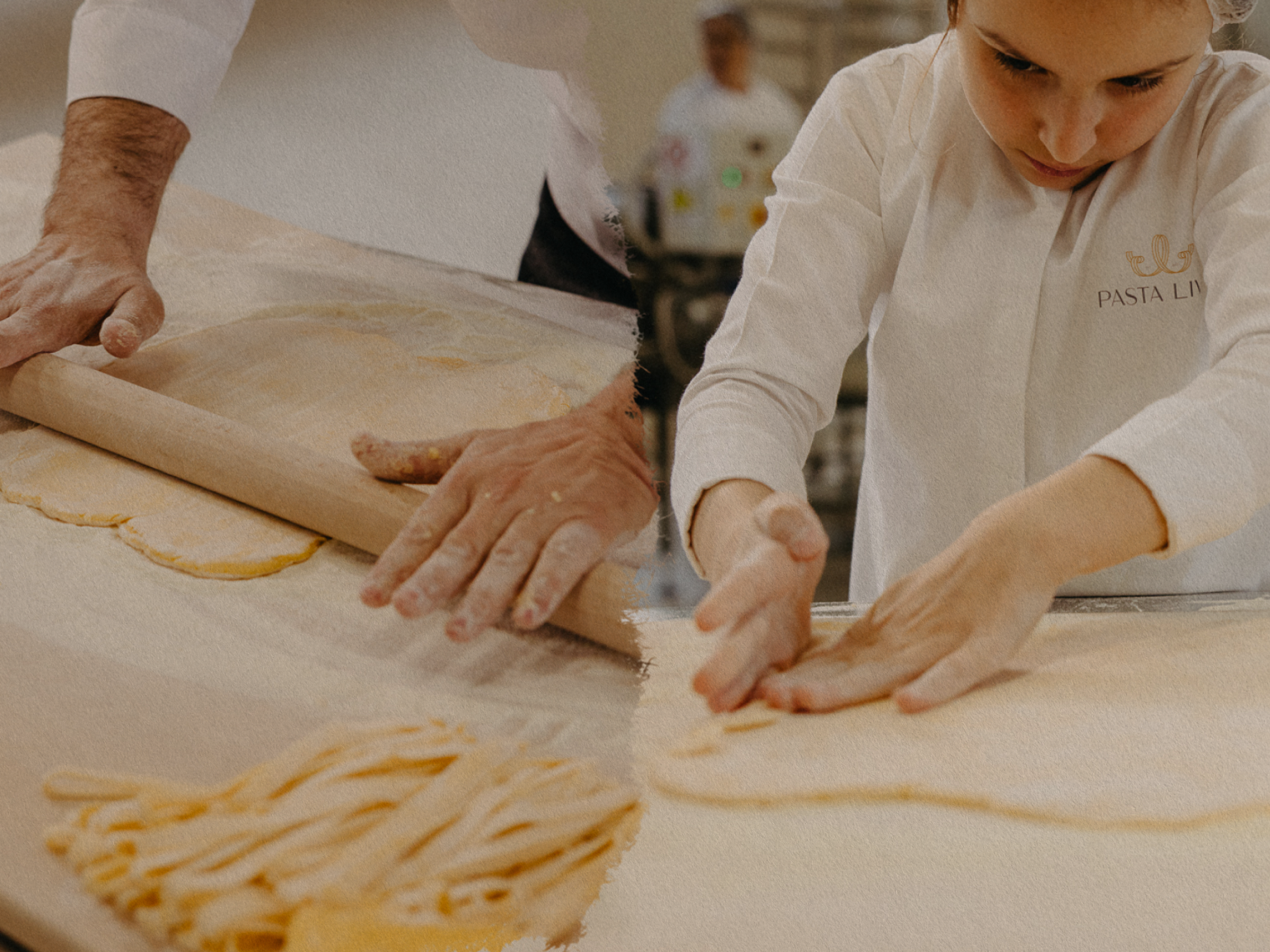
The development process involved testing the ratio of the two fillings, ensuring neither dominated the other, and working out how to seal the dual-chamber structure consistently at production volume. A filling that works perfectly for one ravioli made by hand in a kitchen does not automatically translate into a filling that can be produced at hundreds of units per hour without variation. The bridge between the artisan idea and the industrial reality is where most of the actual development work happens.
Fish, Seafood, and the Seasonal Variable
The same development logic applies to seafood and fish-basedfillings, with one additional complexity: seasonality.
A meat filling, bresaola, slow-braised veal, seasoned pork, can be produced with consistent ingredient quality year-round.A seafood filling tied to seasonal catch cannot. The development conversation for a fish or seafood ravioli therefore has to include the question of when: which months does this ingredient arrive at its best, what happens to the flavour profile outside those months, and how does the production and freezing process interact with the specific texture of fresh fish or shellfish.
The advantage is that seasonal vegetables and herbs, the elements that typically accompany seafood fillings, are straightforward to work with. A spring pea and ricotta filling with a light seafood component, or a summer courgette and prawn combination, can be developed and produced within a seasonal window, then held in IQF frozen stock for the duration of that window's demand. The chef gets a filling that is genuinely seasonal. The kitchen does not have to produce it from scratch every service.
What Makes a Filling Work at Scale
After years of development conversations, a set of consistent principles has emerged about what makes a filling translate successfully from idea to product.
Moisture balance is the first constraint. A filling that is too wet will compromise the pasta dough during production and cause structural failure during cooking. Ingredients with high water content, fresh tomatoes, raw courgette, certain soft cheeses, must be pre-cooked, drained, or processed to reduce their moisture before being incorporated. The filling needs to hold its shape inside the pasta from production through freezing through cooking without leaking or collapsing.
Flavour stability under heat is the second. Some of the most interesting aromatic ingredients, fresh herbs, citrus zests, delicate seafood, lose their character when heated. A filling designed to express the freshness of basil or the brightness of lemon will taste very different after three minutes in boiling water. Development testing has to account for what the filling tastes like after cooking, not just before.
Consistency across batches is the third, and in many ways the most demanding. A restaurant that orders the same ravioli in January, March, and June expects the same flavour every time. Seasonal variation in ingredient quality, changes in supplier, even fluctuations in the fat content of a dairy ingredient, can all shift the flavour of a filling in ways the chef will notice. Managing this consistency, through careful sourcing, standardised preparation, and rigorous quality control at every batch, is what separates a professional producer from a kitchen that makes pasta to order.
The Pasta Livia Catalogue as a Record of Conversations
Looking at the full range of Pasta Livia products, what you are really looking at is a history of development conversations with chefs across the region. Each product represents a specific brief, a specific need, a specific moment when a chef's creative vision met Pasta Livia's production capacity and found a way to exist at scale.
The Ravioli Duet is a conversation about contrast and surprise. The seasonal seafood fagottini is a conversation about timing and freshness. The filled caramelle with ricotta is a conversation about elegance and restraint. The dumplings are a conversation about expanding the format entirely beyond Italian tradition into something that reflects a broader culinary horizon.
Every new product starts the same way. Not with a recipe, butwith a question: what does this kitchen need that it cannot currently find?
If you have an answer to that question, the conversation has already begun.