Albanian Pasta vs. Italian Pasta: The Tradition We Forgot
No One Owns Pasta
There is a common assumption that pasta is Italian. Understandably so, Italy has done more than any other country to develop, systematize, and export it. But pasta is not Italian by origin. It is Italian by craftsmanship.
The oldest known noodles were discovered in northwestern China: a 4,000-year-old bowl of millet noodles found at an archaeological site in Qinghai Province. From there, dough made from flour and water, in various forms, traveled westward along ancient trade routes through Central Asia, Persia, the Arab world, and eventually the Mediterranean. Arab traders brought dried pasta to Sicily in the 12th century, long before Marco Polo ever reached Asia. Italy did not invent pasta. Italy perfected it.
This matters because the moment you understand that pasta is a global idea, shaped dough, filled and cooked in ways specific to each culture, you realize that Albania has been making pasta for centuries. It simply used different names for it.
Albanian Cuisine Already Knew It
Think about lakror. A thin sheet of dough, carefully stretched by hand, filled with seasonal greens, white cheese, or eggs, then layered and baked. By every structural definition, lakror is pasta: flour and water, rolled thin, filled, and cooked. The technique is the same. The logic is the same. Only the name changes.
The same applies to byrek, the layered pastry filled with spinach and curd cheese or minced meat that appears on Albanian tables for every occasion. The thin sheets of dough, stretched by hand until paper-thin, are the Albanian equivalent of pasta sheets. In a different cultural context, the same dough, the same filling, and the same folding technique would produce ravioli or tortellini. Here, it produces byrek. Ingredients do not recognize borders.
Albanian cuisine has always operated with the logic of pasta, even without the vocabulary to describe it that way. Fresh dough as a vehicle for seasonal flavour. Filling as an expression of what the land offers at a particular moment. Technique as a way of transforming simple ingredients, flour, water, eggs, cheese, into something generous and complete.
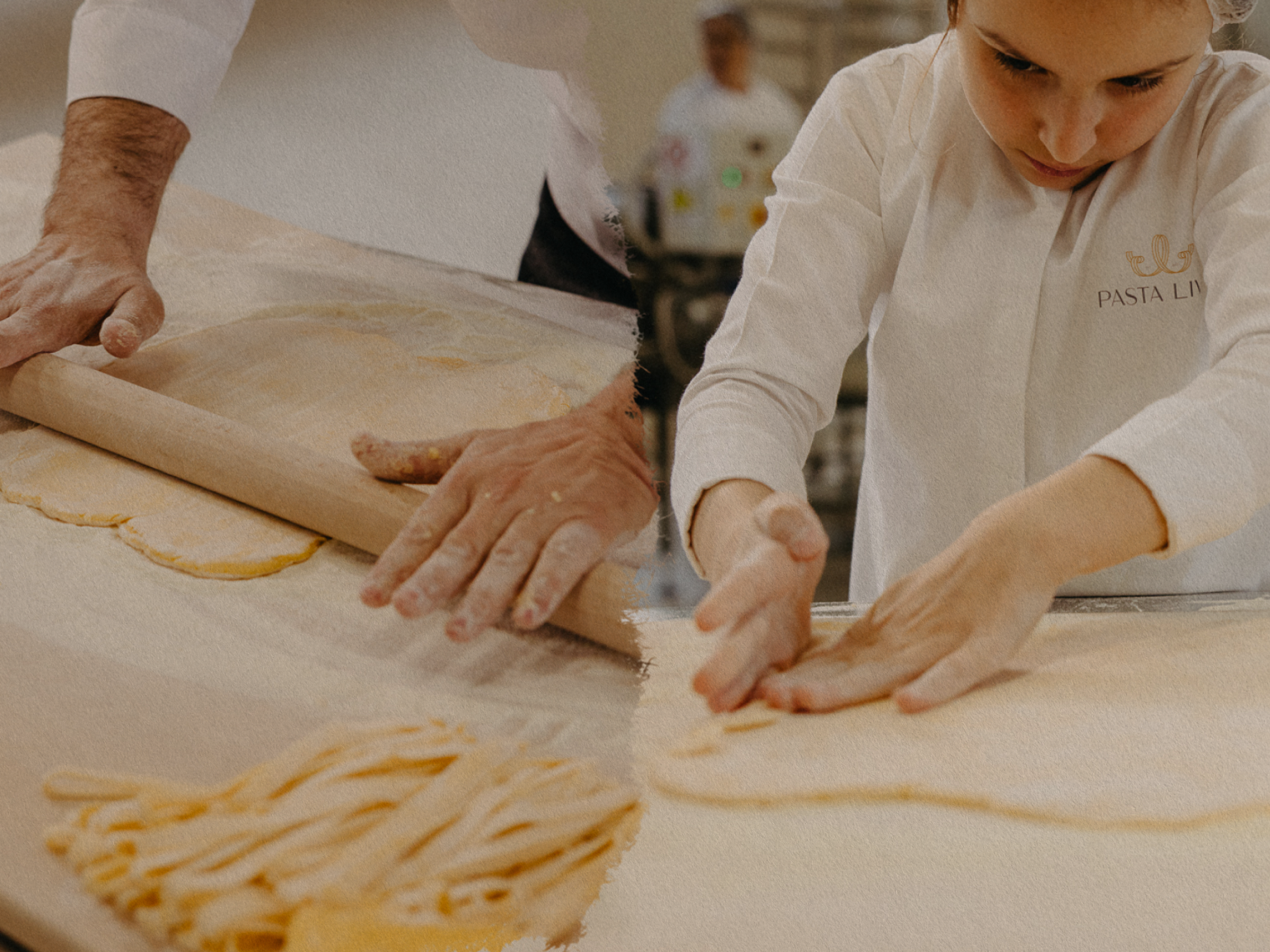
“The dough sheets my grandmother rolled across the kitchen table and the pasta sheets that pass through our machines today share the same ancestor. Different names. The same hands.”
What Albanian Cuisine Brings to Filling
The most interesting question is not whether Albania has a pasta tradition. It does. The more interesting question is: what does the Albanian culinary repertoire offer as filling, and how does it translate into pasta?
The answer is: a great deal.
Tavë Kosi: Albania’s national dish of slow-cooked lamb baked with yogurt and eggs, is one of the most exciting filling possibilities imaginable. Tender lamb combined with the rich yogurt-and-egg mixture baked until golden would create something entirely different from the Italian repertoire. Rich, slightly tangy, unmistakably Albanian.
Fërgesë: the summer dish of roasted peppers, tomatoes, and curd cheese cooked together in a clay pot, translates directly into a seasonal pasta filling. The roasted vegetables concentrate flavour during cooking, while the cheese provides creaminess, resulting in a filling that captures the taste of an Albanian summer in every bite.
Paçe koke, with its deep flavour from slow-cooked meat and bones, belongs to winter: a filling that demands a pasta shape sturdy enough to carry it, something like a large raviolo or paccheri, and a sauce light enough not to compete with it.
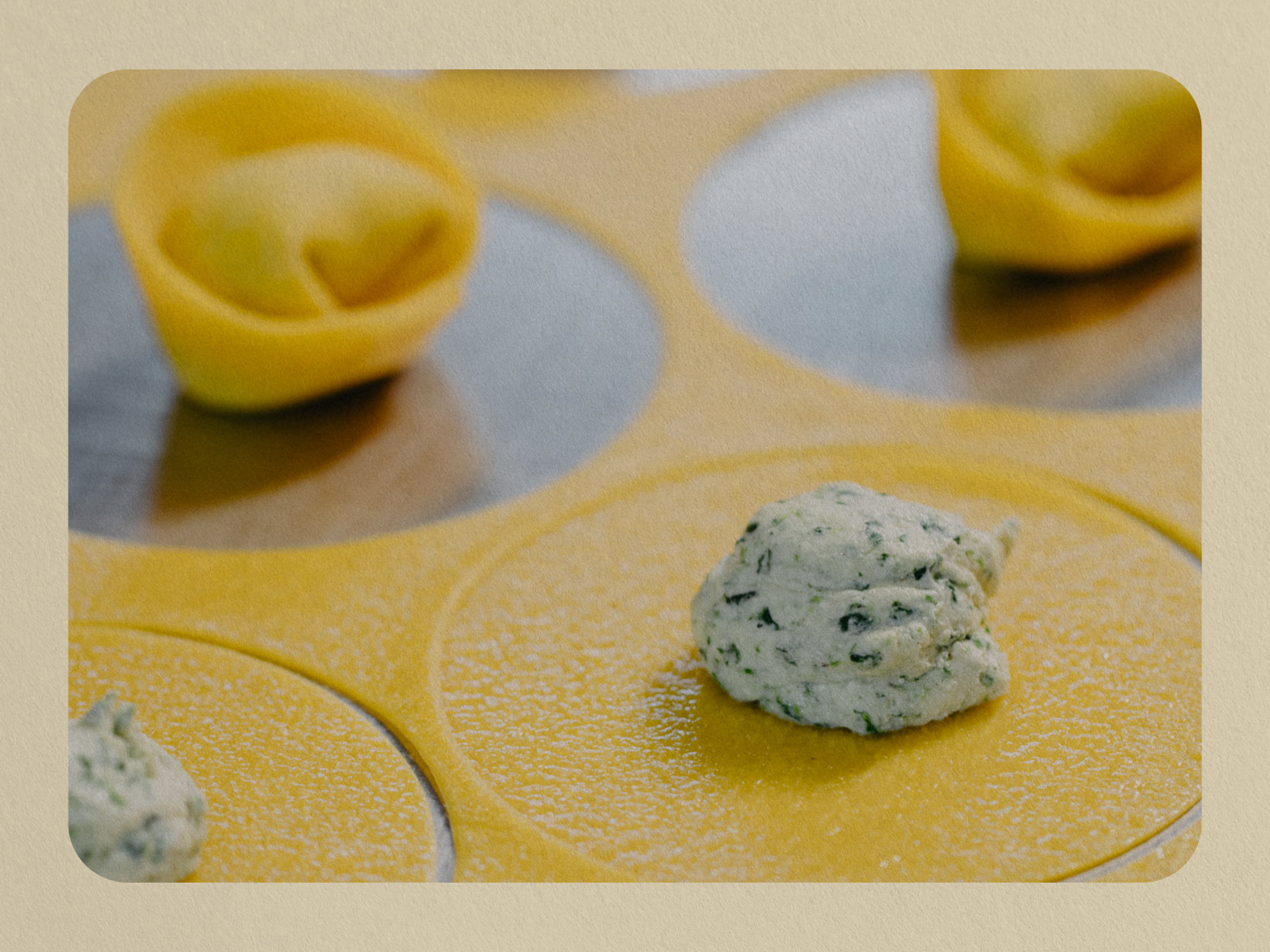
Wild herbs, wild garlic, nettles, and mountain greens, which have filled Albanian pies for centuries are exactly the ingredients that make a distinctive pasta filling. Lightly blanched, thoroughly drained, and mixed with fresh cheese, they create the type of filling that defines the Authentic pasta tradition: a direct expression of what the land produces, prepared with only what is necessary to let it speak for itself.
The Bridge Between Two Traditions
Italy’s great contribution was not the invention of pasta, but its systematization. Over centuries, Italian cooks developed a rigorous grammar: which dough for which shape, which shape for which sauce, which region for which tradition. They transformed an instinct shared by many cultures into a culinary discipline.
The Albanian culinary instinct is just as deep. The flavours are here. The techniques are here, hand-stretched dough, carefully seasoned fillings, seasonal produce, and local dairy. What has been missing is the bridge between Albanian ingredients and a pasta format capable of bringing them to a professional table.
That is precisely why Pasta Livia’s Authentic line was created. Not as pasta that imitates Italian tradition, but as pasta that takes the structure and craftsmanship of filled pasta, precise dough rolling, careful sealing, consistent cooking performance, and uses it as a vehicle for Albanian flavour.
An Invitation to Chefs
For Albanian chefs and restaurateurs, this represents an opportunity that does not yet exist anywhere else in the market: a professionally produced, locally made pasta platform designed to carry Albanian flavours in a format that fine dining and contemporary kitchens can work with.
A ravioli filled with tavë kosi. A fagottini filled with fërgesë and mountain herbs. A large pasta parcel filled with slow-cooked lamb and finished with a yogurt glaze. These are not fusion dishes. They are Albanian cuisine expressed through a format that allows kitchens to produce them consistently, at scale, without the burden of handmade pasta production that would make them impractical during busy service.
Italy spent centuries building this bridge between culinary tradition and pasta craftsmanship. Albania does not need centuries. The ingredients are here. The tradition is here. The pasta is ready.
“We did not look to Italy to learn what pasta should taste like. We looked at what Albanian cuisine has always known how to say, and found a way to say it through pasta.” — Durim Shahinas, Pasta Livia
Explore the Authentic Collection from Pasta Livia
Visit our Authentic Pastas to discover filled pasta rooted in local tradition.