How the Season Changes the Pasta Menu
A pasta menu that stays the same all year is a menu that ignores half its ingredients. The seasons do not just change what is available, they change what flavour means. A tomato in August and a tomato in January are barely the sameingredient. A pea in May is sweet and delicate; the same pea out of season in December is background noise.
For a professional kitchen, working with the season is not simply an aesthetic choice. It is a practical advantage: seasonal produce arrives at peak flavour, costs less, and requires less manipulation. The kitchen does less work for a better result.
But seasonal cooking with pasta has its own logic, one that goes beyondswapping vegetables. The season affects the filling inside the pasta, the saucearound it, the garnish on top, and even which pasta shape belongs on the plate.Understanding how these four elements shift together, season by season, is thefoundation of a pasta menu that is always alive.
The Underlying Principle: Water Content and Flavour Intensity
Before walking through the seasons, there is one principle worth holding onto, because it governs all the decisions that follow: summer ingredients carry water, winter ingredients carry intensity.
Spring and summer produce, zucchini, fresh tomatoes, peas, asparagus, basil, courgetteflowers, are high inwater content. Their flavour is bright, clean, and relatively gentle. They donot dominate a dish; they complement it. A pasta built around them should belight enough to let them come through.
Autumn and winter ingredients, porcini mushrooms, truffles, aged cheeses, slow-braised meats, chestnuts, roasted squash, behave very differently. They carryconcen trated, deeply layered flavour that asserts itself strongly. A winter ravioli filling is not a backdrop for the pasta. It is the destination. The pasta is the vehicle.
This contrast, delicacy and brightness in the warm months, depth and intensity in the cold, is the compass that guides every seasonal pasta decision.
Spring: Colour, Freshness, and the Return of Lightness
Spring is the reset after winter. The market suddenly fills with ingredients that are tender, high in water, and visually striking. Cooking with them well means restraint, letting them carry the dish, rather than building elaborate constructions around them.
The Filling
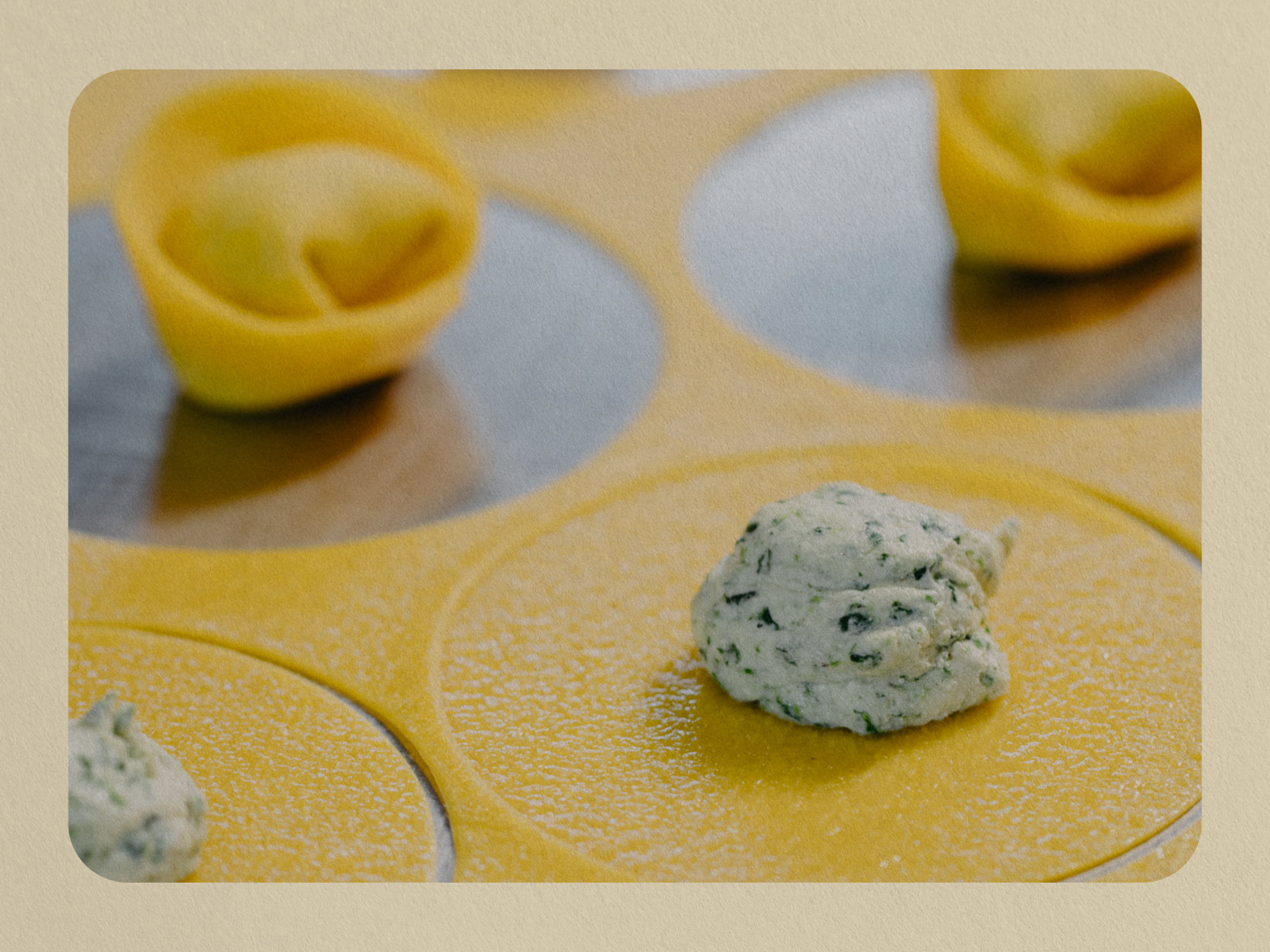
Spring fillings are delicate by nature. Fresh ricotta with asparagus tips and lemon zest is one of the most effective combinations of the season: the asparagus brings mild bitterness and vegetal freshness, the ricotta provides a creamy base without heaviness, and the lemon keeps everything alive.Fresh peas blended with mint and ricotta produce a filling that is unmistakably seasonal. Young spinach, Swiss chard, and spring onion can add colour and lightness in small quantities.
One important technical note: spring vegetables carry a lot of water. They must be well drained before being incorporated into any filling.Raw or insufficiently dried spring vegetables will make the pasta dough soggy from the inside and will steam rather than cook cleanly.
The Sauce
Light sauces are the rule in spring. Brown butter with lemon and sage allows the filling to speak for itself. A fresh tomato sauce, made with the first seasonal tomatoes and cooked quickly rather than reduced for hours, is still vibrant enough to complement without overwhelming. Pesto Genovese, made with basil at its spring peak, is one of the season's great pasta companions: aromatic, oil-rich, and immediate. Cream sauces are still appropriate, but should be thin and bright, a light reduction with lemon and fresh herbs, not a heavy winter-style coating.
Garnishes and Plating
Spring plating is an exercise in colour. Edible flowers, fresh pea shoots, micro-herbs, crispy asparagus tips, thinly shaved radish, these are not decorative afterthoughts. They add textural contrast and visual brightness to dishes that might otherwise read as too simple. The season's palette is green, white, and the occasional pop of orange or yellow. Pasta Livia's caramelle is particularly well-suited to spring, its clean silhouette holds the filling elegantly and presents beautifully against a pale butter sauce with seasonal green garnishes.
Summer: Abundance, Boldness, and the Heat of the Season
Summer is the most generous season in the kitchen. Tomatoes, aubergine, courgette, peppers, basil, fresh seafood, the produce is at its peak, and the flavours are confident. Summer pasta does not need to be subtle. It can be direct.
The Filling
Summer fillings c an handle bolder combinations. Ricotta with sun-dried tomato and basil. Goat's cheese with roasted pepper. Seafood, shrimp with mascarpone, crab with lemon and ricotta, works in summer because the lighter heat of the season does not weigh it down. Roasted aubergine blended with Pecorino makes a filling with genuine character.
The high-water-content challenge is even more pronounced in summer. Tomatoes, courgette, and peppers must be roasted or thoroughly drained before being used as fillings. The solution is time in the oven first: roasting concentrates the flavour and removes excess moisture simultaneously. A wet summer filling will destroy the pasta during cooking.
The Sauce
Summer is the season of the quick sauce. A fresh pomodoro, ripe tomatoes, olive oil, garlic, torn basil, ten minutes of cooking, is one of the best pasta sauces of the year precisely because the tomatoes are good enough not to need more. Puttanesca, with its capers, olives, and anchovies, belongs to summer: its sharp, salty intensity cuts through the heat of the season rather than adding to it. Olive oil-based sauces, a glio e olio, seafood pasta with white wine and clam juice, are at their best in summer. Heavy cream sauces and slow-cooked ragùs feel wrong in August. The season's produce does not need them.
Garnishes and Plating
Summer plates can handle contrast and visual boldness. Crispy elements, fried capers, toasted pine nuts, lemony breadcrumbs, add texture against soft, juicy ingredients in the sauce. Fresh herbs scattered at the last moment carry volatile aromatics that lift the whole dish. Pasta Livia's fagottini, particularly the black variety made with squid ink, pairs visually and flavourfully with summer seafood preparations: the deep colour against a pale sauce, finished with the bright orange of fresh prawns, makes for one of the most striking plates of the season.
The Production Advantage: Cooking Seasonally at Scale
For a restaurant that takes seasonal cooking seriously, there is a practical challenge alongside the creative one: producing enough of the right pasta, consistently, for an entire service.
A kitchen that makes its own fresh pasta from scratch must balance production time against service demand. When seasonal menus change every few weeks, and when a dish like truffle ravioli requires careful, labour-intensive production, that balance becomes very difficult to sustain without compromising either quality or volume.
This is one of the concrete reasons why restaurants that partner with Pasta Livia are able to cook more seasonally, not less. Rather than being limited by production capacity, they can specify the filling, the shape, and the volume they need for a given seasonal menu, and receive it consistently, at scale, without variation between batches.
The IQF freezing process preserves the seasonal filling's character exactly as it was produced. A truffle and ricotta ravioli frozen immediately after production retains the truffle's aroma, the ricotta's texture, and the pasta's structural integrity when it arrives at the table. The kitchen gains the creative freedom of seasonal cooking without the production burden that would otherwise make it impractical.
TheCalendar as a Creative Partner
A seasonal pasta menu is not a constraint. It is a creative framework, one that imposes change regularly and productively, keeps the kitchen attentive, and gives diners a reason to return. A menu that changes with the season is a menu that is always current, always connected to what is actually happening in the world outside the kitchen window.
The principle is straightforward: read the season, understand what its ingredients are communicating, lightness and water content in summer, depth and intensity inwinter, and let thatshape the filling, the sauce, the garnish, and the choice of pasta. The rest follows from there.
At Pasta Livia, the product range was built around exactly this logic. The caramelle holds spring and summer fillings gracefully. The ravioli carries the depth of autumn and winter. The fagottini presents seasonal seafood at its best. The dumplings anchor winter preparations that need a substantial shape. Every product is designed to be part of a kitchen's seasonal repertoire, not a year-round compromise, but a shape that earns its place at specific moments in the calendar.
Want to explore Pasta Livia's full seasonal range?
Visit our products to browse our Artisanal, Classic, and Authentic collections