Al Dente: The Most Misunderstood Term in the Kitchen
What it actually means, why it matters more than most chefs realise, and the two rules that make it possible every time.
Ask ten chefs what al dente means and most will say the same thing: pasta that is slightly undercooked, with a bit of bite. Not completely soft. Not raw. Somewhere in between.
This is not wrong, but it is incomplete and the gap between the common understanding and the precise one is where most pasta mistakes happen.
Al dente is not a texture preference. It is a specific physical state that pasta reaches at a precise moment during cooking, and once you understand what is actually happening inside the dough at that moment, the way you cook pasta changes permanently.
"Al dente does not mean undercooked pasta, as many people assume. It means that the tooth cuts through the pasta, not that the pasta sticks to the tooth." — Durim Shahinas, Pasta Livia
What Al Dente Actually Means
The phrase is Italian for “to the tooth” and that is precisely the test. When you bite a piece of pasta cooked al dente, your tooth should cut cleanly through it, meeting a very slight resistance at the centre, then passing through. The pasta should not be hard, but it should not give way without any resistance either.
The opposite of al dente is not raw pasta. The opposite is pasta that sticks to the tooth, that becomes soft enough to compress and cling rather than yield cleanly. This is overcooked pasta, and it behaves completely differently, both in the mouth and in the body.
The distinction is not academic. It has direct consequences for digestion, for flavour, and for how the pasta interacts with the sauce on the plate.
What Happens Inside the Pasta When You Overcook It
Pasta is made from starch and protein. During cooking, the starch granules absorb water and swell. The proteins set around them, creating a structure that holds the shape and gives the pasta its texture. Al dente pasta has fully hydrated starch but still has a firm protein network holding everything together.
When pasta is cooked past that point, the protein network begins to break down. The starch becomes fully gelatinised and the pasta turns soft throughout. In the mouth, this feels like a loss of resistance, the pasta compresses and dissolves rather than yielding with structure.
In the digestive system, the consequences are more significant than most people realise. Overcooked, soft pasta has a high glycaemic index: the fully broken-down starch is absorbed rapidly into the bloodstream, causing a sharp spike in blood sugar followed by a rapid fall. This is why a largeplate of overcooked pasta leaves you feeling heavy and tired shortly aftereating.
"When pasta is overcooked, the stomach works hard to process it. It breaks down too fast, gets exposed to sugar, and becomes very sweet. Al dente is perfection. Italians are physically lean because they eat pasta cooked properly." — Durim Shahinas, Pasta Livia
Al dente pasta, by contrast, digests more slowly. The intact protein structure requires more work to break down, which means slower absorption, a more gradual blood sugar curve, and a longer-lasting feeling of fullness. The same dish, cooked differently, produces a fundamentally different nutritional outcome.
Salt: The Structure You Cannot Skip
The second most misunderstood element of cooking pasta is salt, and its role goes far beyond flavour.
Salt in pasta water functions like salt in a brine. It draws moisture through osmosis, and in doing so, it reinforces the protein network in the dough. Properly salted water produces pasta with a firmer, more defined texture. The pasta holds its structure better during cooking, maintains its al dente quality longer in the pan when you are finishing the dish, and does not become soft and sticky as quickly.
Unsalted pasta water produces pasta that is not just bland, it is structurally weaker. The protein network sets less firmly, and the pasta overcooks more easily and loses its texture faster once it leaves the water.
"Salt in pasta water is not just about flavour. It works like a brine, it preserves the structure of the pasta. Without it, everything falls apart." — Durim Shahinas, Pasta Livia
The correct ratio is straightforward and worth memorising: 6grams of salt per litre of water. Many kitchens use far less, often out of habit or a misguided concern about sodium. The pasta is in the water for only a few minutes; it does not absorb salt the way vegetables do. What it absorbs is structure.
The Water Ratio: Less Than You Think
There is a common belief in professional kitchens that pasta requires an enormous amount of water, a large pot, filled to the brim, at a rolling boil. This is partly true and partly unnecessary.
The minimum effective ratio is half a litre of water per 100grams of pasta. At this ratio, the water reaches its boiling point faster, the starch that leaches from the pasta concentrates more quickly into the water, and the pasta water you reserve at the end of cooking, the liquid that professional kitchens use to bind and emulsify sauces, is richer and more effective.
Importantly, this ratio works regardless of whether the pasta is fresh, dried, or frozen. The state of the pasta when it enters the water does not change the fundamental chemistry. What changes is the cooking time, but the water ratio, the salt ratio, and the al dente principle remain constant.
Fresh Pasta, Dried Pasta, Frozen Pasta: The Same Rules Apply
One of the most persistent misconceptions in professional kitchens is that al dente applies only to dried pasta. Fresh pasta, the thinking goes, is too delicate to have real bite, it should be soft.
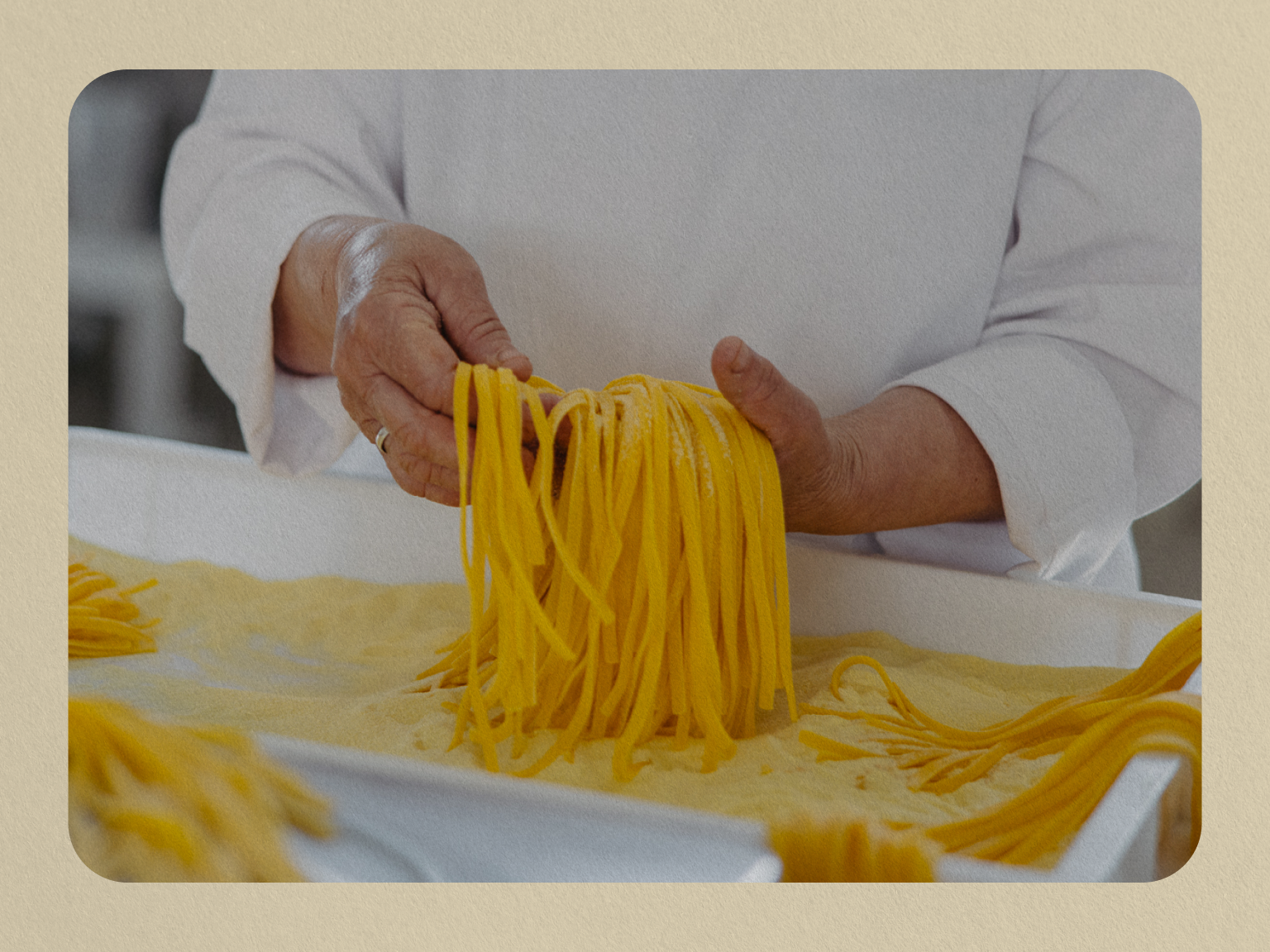
This is incorrect. Fresh pasta cooked al dente has a distinctly different texture from fresh pasta cooked through: firmer, cleaner on the palate, with a chew that holds up against the sauce rather than dissolving into it. The cooking time is much shorter, often two to three minutes for fresh pasta versus eight to twelve for dried, but the moment of al dente is just as real and just as important.
Frozen pasta, produced with IQF technology as Pasta Livia does, behaves identically to fresh pasta in the water. The individual quick freezing process locks the pasta at exactly the state in which it was produced,and the cooking water brings it back to that state precisely. There is no adjustment needed for cooking time, no softness to compensate for. The al dente moment arrives at the same point it would for fresh pasta.
How to Know When You Are There
The only reliable test is the tooth. Not the clock, not the colour, not the texture when you press the pasta against the side of the pot.The tooth.
Take a piece of pasta out of the water about a minute before the suggested cooking time ends. Bite through it. If there is a thin white line of uncooked starch at the very centre, you are not there yet. If the pasta cuts cleanly with a very slight resistance and no white line, you are at al dente.If it gives way without any resistance and feels uniform throughout, you have passed the moment.
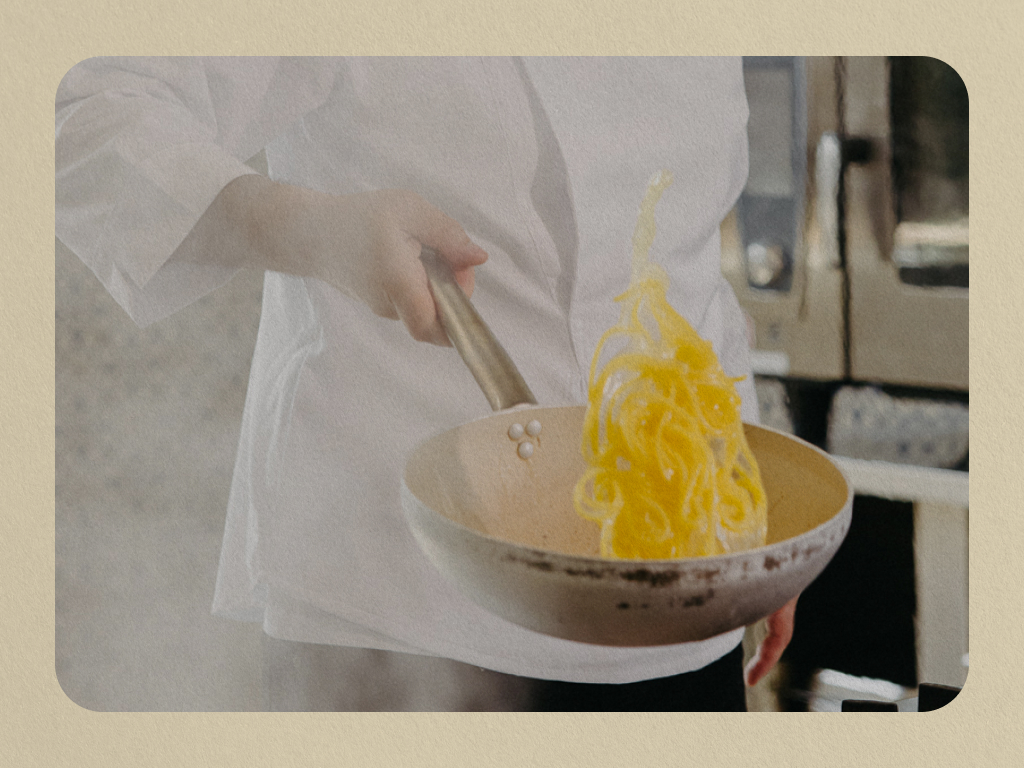
In a professional kitchen, the relevant additional consideration is carry-over cooking. Pasta continues to cook after it leaves the water, in the pan with the sauce, on the way to the table, on the plate. For a dish that will spend thirty seconds to a minute in the pan being tossed with the sauce, pull the pasta from the water thirty seconds before it reaches al dente in the pot.Let the pan finish the job. The result will be perfect at the table rather than already past its peak.