The shape of a perfect dish
How pasta geometry determines the sauce, and why every chef should understand the difference
There is a rule in every serious Italian kitchen, a rule that comes before recipes and trends: the shape of the pasta determines the sauce. Not the other way around. This is not a matter of aesthetics or convention. It is a matter of physics and flavour distribution. The geometry of a pasta, its surface, hollow core, ridges, thickness, determines how much sauce it holds, how that sauce is distributed across the palate, and whether the final bite feels balanced or heavy, unified or disjointed.
If the combination is correct, the sauce becomes part of the pasta. If it is wrong, the sauce pools at the bottom of the plate and the pasta carries little character of its own. At Pasta Livia, we work every day with chefs across the region who deeply understand this principle. What follows is a practical guide to the pairings we have seen work best, grounded in culinary tradition and informed by what actually happens in a professional kitchen.
The fundamental rule: weight matches weight
Before looking at specific pairings, there is a principle that guides them all: the weight and texture of the pasta must match the weight and texture of the sauce.
A thin pasta requires a light sauce. A thick, sturdy pasta can carry a thick, robust sauce. When these two elements do not match, one will always dominate the other.
“The thinner the pasta, the better it suits a delicate sauce. The thicker the pasta, the more it can handle something rich and heavy.” - Durim Shahinas
This single principle is the fastest path to better pasta dishes. Once a chef understands it, specific pairings become intuitive.
Long, thin pastas: delicate carriers
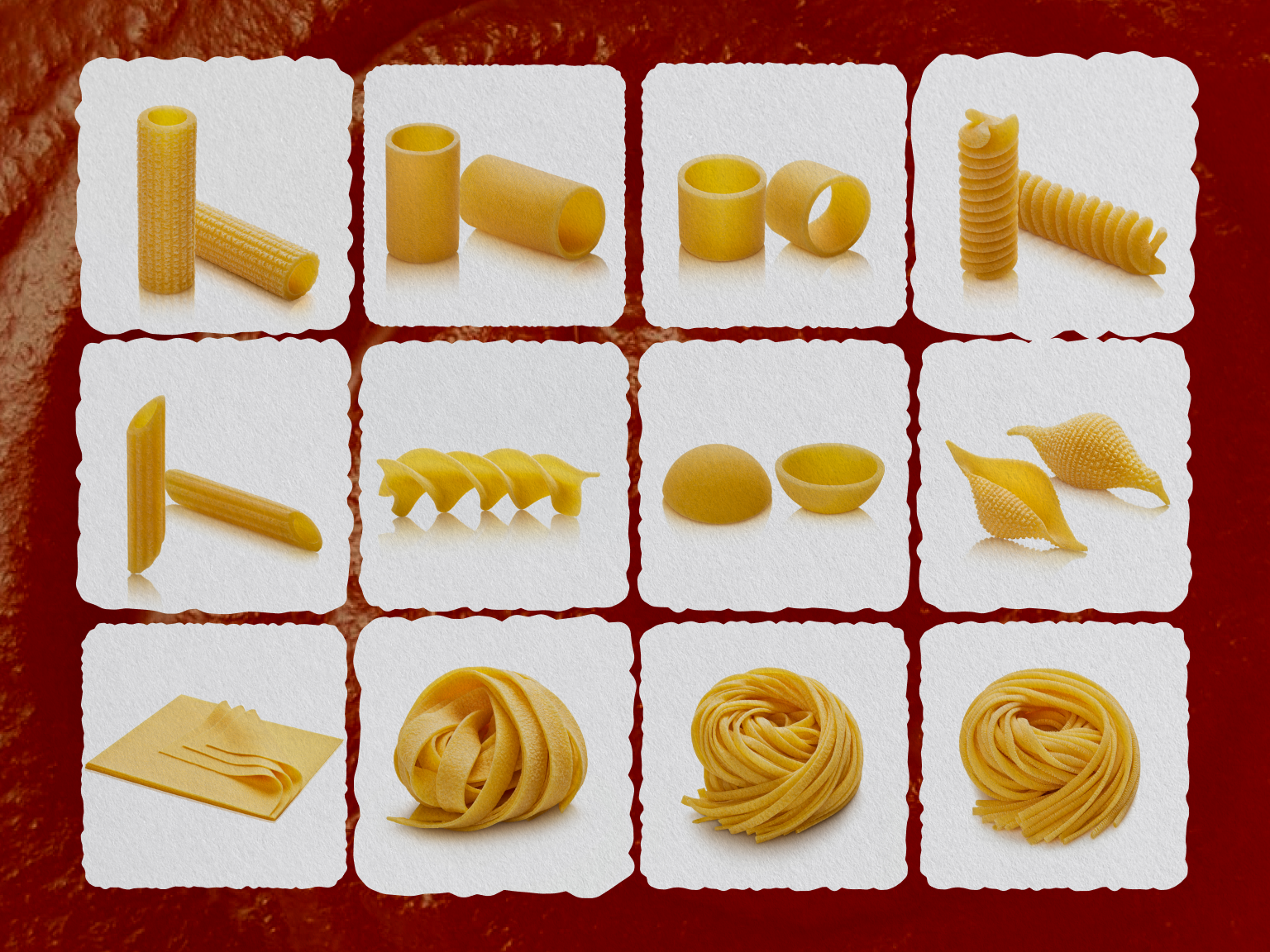
Spaghetti, linguine, tonnarelli, tagliolini, these are among the most recognizable pasta shapes in the world, and at the same time, among the most misused. Their narrow profile means limited surface area and no internal structure to hold sauce. They are designed to be coated evenly, not overloaded.
Spaghetti × Carbonara, Cacio e Pepe, or light cheese cream
Spaghetti works extremely well with creamy, emulsified sauces. A classic carbonara, eggs, guanciale, Pecorino Romano, black pepper, coats each strand in a thin, even layer. Cacio e Pepe works for the same reason: the starchy pasta water emulsifies with cheese and fat to create a smooth, light texture. What spaghetti cannot do is carry a heavy, chunky ragù. The sauce slips off, the meat falls to the bottom, and the dish loses coherence.
Linguine × Seafood and oil-based sauces
Linguine is the slightly wider, flatter cousin of spaghetti. This extra surface makes it the natural partner for seafood. Mussels, prawns, their juices emulsify with olive oil and white wine to create a light, aromatic sauce that coats the flat surface perfectly.
Wide ribbons: built for richness
Fettuccine, tagliatelle, pappardelle, these are shapes made for richer sauces. Their width provides structure and, when made with eggs (as tradition dictates), their porous surface absorbs sauce rather than simply being coated by it.
Tagliatelle / Fettuccine × Ragù or creamy sauces
There is a reason why tagliatelle al ragù is the classic dish of Bologna: the wide surface of fresh pasta is ideal for a slow-cooked meat sauce. The sauce clings to every ribbon, and every bite delivers both pasta and sauce together.
Pappardelle × Heavy ragù
Pappardelle are even wider and demand heavier sauces, wild boar, duck, slow-braised meats. These intense sauces would overwhelm any thinner shape.
Tubes and ridges: designed to trap
Penne, rigatoni, paccheri, these shapes exist for a specific purpose: to capture sauce inside their hollow cores and hold it against their ridged surfaces. Every bite becomes a delivery system for concentrated flavour.
Rigatoni / Penne × Arrabbiata, Amatriciana, or chunky tomato sauces
The ridged, tubular structure of rigatoni and penne makes them the natural partner for bold, assertive tomato sauces. Arrabbiata, olive oil, garlic, and dried chilli in tomato, pushes into the ridges and fills the tubes. Amatriciana, with its guanciale and tomato base, works the same way. These are sauces with texture and personality, and they need a pasta shape that can stand up to them.
A smooth, thin sauce on rigatoni would be wasted, it would simply pass through the tube and pool beneath the pasta. Thickness and texture are the point.
Paccheri × Seafood, light tomato, or single-ingredient sauces
Paccheri are oversized tubes, wide enough to stuff, substantial enough to hold a large prawn or a generous spoonful of seafood sauce. In Naples, where paccheri originates, it is often served with fresh tomato and seafood in combinations that allow the sauce to “breathe” inside the tube. The shape invites minimalism: fewer ingredients, more presence.
Filled pasta: let the interior speak
Ravioli, tortellini, caramelle, fagottini, filled pastas operate by a completely different logic. Their flavour is primarily internal. The filling, ricotta, meat, vegetables, fish, is the protagonist. The sauce exists to complement, not compete.
Ravioli / Caramelle × Butter, cream, or delicate sage
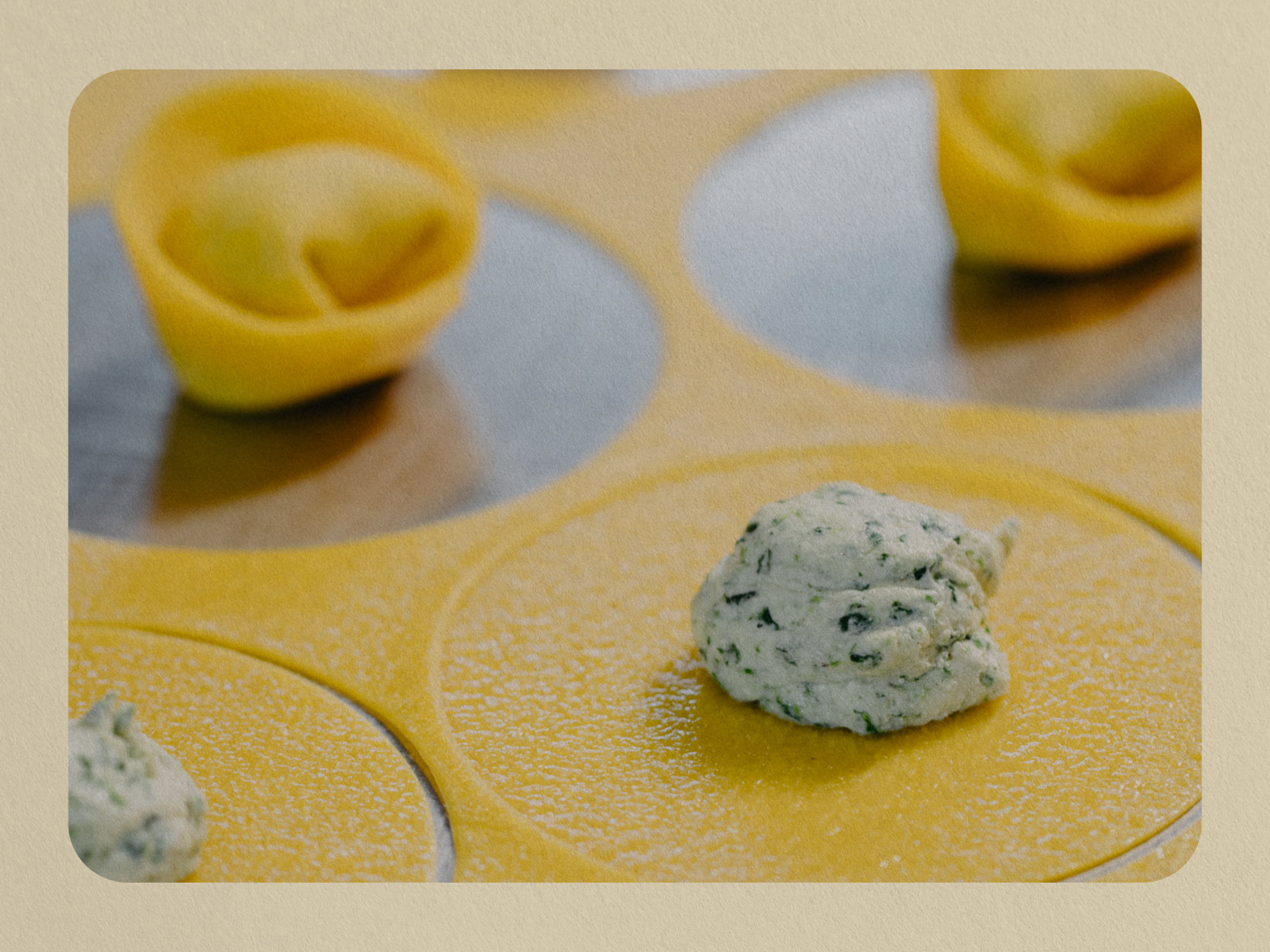
A rich ravioli filling — ricotta and spinach, for example — does not need a heavy external sauce. It needs something that amplifies without overwhelming. Burro e salvia (brown butter and sage) is the classic answer: aromatic, light, and subtle enough to let the filling come through. A mushroom cream sauce follows the same principle. The pasta speaks; the sauce provides the stage.
Heavy tomato or meat sauces on delicate filled pasta create competition where there should be harmony. The filling gets lost, the balance collapses, and the technical achievement of the pasta itself becomes irrelevant.
“Ravioli filled with ricotta should feel like a gift, something inside worth discovering. A heavy sauce wraps it in paper so thick you forget there was anything inside.”
Twisted shapes: the sauce catchers
Fusilli, trofie, strozzapreti, casarecce, these shapes have twists, ridges, and spirals designed to catch sauce and hold it. They are among the most flexible shapes in terms of pairing, because their geometry works with almost any sauce that has some texture.
Fusilli / Trofie × Pesto or textured sauces
Pesto is the canonical partner for fusilli and trofie. The twisted surface grips the chunky, oil-rich sauce and holds it through every bite. Trofie is the traditional Genovese pairing, its rough surface and tight twist capture basil, pine nuts, and olive oil perfectly. Fusilli also works well with meat ragù, chunky marinara, or any sauce with small pieces of vegetables or cheese.
The most common mistake
The most frequent mistake we see in professional kitchens is using spaghetti or linguine as a universal base, reaching for long, thin pasta regardless of what the sauce requires. It is the default choice for many cooks, and the wrong one for more sauces than most realise.
A rich Bolognese on spaghetti is a category mismatch: the sauce is too heavy, the pasta too thin, and the dish ends up unbalanced. The same ragù on tagliatelle, the pasta Bologna has always used, becomes something entirely different.
Knowing the rules is the starting point
These pairings are not arbitrary. They emerged over centuries from people paying close attention to what made food taste better. Tradition, in the Italian kitchen, is not nostalgia, it is a condensed record of what actually works.
Understanding the logic behind each pairing allows a chef to apply the rules with confidence, and to know when breaking them, intentionally, produces something worth eating.
At Pasta Livia, every shape is produced with this in mind. Ravioli is designed to carry a light butter sauce. Rigatoni is ridged to grip what you put on it. Paccheri is sized to accommodate the seafood that belongs inside it. The shape is never decorative. It is always functional.
Want to explore the full Pasta Livia range?
Visit our products to browse our Artisanal, Classic, and Authentic collections.